
Spend enough time looking at kitchen inspiration and you’ll start to wonder whether anything is safe to choose.
White cabinets are out. Wood is back. Now that particular wood tone is out. Someone says green is timeless, and someone else says you’ll regret it.
Meanwhile, you’re preparing to spend a considerable amount of money on a kitchen you probably don’t intend to renovate again anytime soon.
After more than twenty years designing interiors, I don’t think timeless kitchen design comes down to a list of approved cabinet colors or materials. White, wood, green, blue, and gray can all have a place. What matters is the particular finish, how it works with everything around it, and whether the design makes sense for your home and the way you live.
And sometimes, the thing you love most is the thing someone else would tell you to avoid.
What Actually Makes a Kitchen Feel Timeless?
When homeowners ask for a timeless kitchen, they usually mean they want to make choices they won’t regret. They want the kitchen to feel appropriate years from now, without looking like a collection of everything that happened to be popular the year it was installed.
That’s a reasonable goal. But no kitchen exists completely outside its time.
Materials, appliances, construction details, and the way we use our homes all change. A kitchen can show its age and still be beautiful, functional, and worth keeping.
What gives a design staying power is usually the relationship between its parts: cabinetry that suits the room, materials that work together, details that belong in the house, and enough restraint that every surface isn’t competing for attention.
A kitchen also needs to reflect the people who live there. Choosing finishes you don’t particularly like because someone called them timeless can leave you dissatisfied from the beginning.
White or Wood Cabinets? Either Can Have Staying Power
We’ve all seen kitchens from the 1940s and 1950s with painted cabinets or wood cabinetry. Neither category is new, and neither is automatically destined to look dated.
When homeowners worry about wood cabinets, I think many are picturing the orange-toned oak kitchens associated with the 1980s and 1990s. They’re concerned that today’s wood kitchen will eventually be just as recognizable.
That concern makes sense. But “wood cabinets” covers an enormous range of species, tones, grain patterns, door styles, and finishes. The specific combination matters much more than the fact that the cabinets are wood.
The same applies to white. A white cabinet can feel warm, stark, traditional, or contemporary depending on its undertone, door profile, and surroundings.
Rather than asking whether white or wood is more timeless, I would ask:
- Does this finish work with the floors and other wood tones?
- Does the door style make sense for the house?
- Do the countertop and backsplash complement it?
- Would I still like this cabinetry without the styling and lighting in the inspiration photo?
Those questions will tell you more than a prediction about which finish is coming back next year.
Colorful Kitchen Cabinets Can Be a Lasting Choice, Too
Certain greens, blues, and grays can function almost like neutrals. Their undertones and intensity allow them to sit comfortably alongside other materials without dominating the entire room.
Brighter or more unusual colors tend to make a stronger statement. They may also be more closely associated with a particular design moment. But that doesn’t automatically make them a poor choice.
Imagine a homeowner who has always loved Kelly green. Their wardrobe is full of it. They’ve wanted a green kitchen for years.
I would approach that very differently from someone who started considering green cabinets last week because the same kitchen keeps appearing in their feed.
For the first homeowner, that color has a history. There is a good reason to believe they’ll continue to enjoy it.
My job is to help make the choice work. That might mean keeping the countertop quieter, choosing a simple backsplash, and being more restrained with the other finishes.
A strong personal preference can be a better foundation for a design than a supposedly safe choice you feel nothing about.
Countertop Patterns Deserve More Attention Than They Get
Cabinet color gets much of the attention in conversations about timeless kitchens. I would look just as carefully at the countertop.
It covers a substantial surface area. On an island, it may be one of the first things you see when you enter the room. If that material continues up the backsplash, its visual presence becomes even stronger.
Some of the dramatic veining patterns I was seeing everywhere a few years ago already feel more tied to that particular moment to me.
That doesn’t mean every bold countertop will age poorly. A dramatic slab can be beautiful. But it deserves careful consideration, especially when the cabinets, backsplash, and lighting are also making strong statements.
Natural stone isn’t automatically timeless, either. Granite and marble vary enormously in color, movement, and character. Quartz can be subtle and convincing, or its pattern can become the defining feature of the kitchen.
Appearance is only part of that decision. If you’re comparing materials, start with the differences between quartz, granite, and marble countertops, including the maintenance and everyday trade-offs.
If longevity is your priority, look closely at the specific slab or pattern rather than relying on the material name. Consider its contrast, the scale of its movement, and how it looks across a full countertop.
A small sample may show you the background color while telling you very little about the overall effect.
For a quieter kitchen, a countertop with softer movement or a subtle stone-like pattern can give the other materials room to stand out.
You can also use the Countertop Selector Tool to narrow your material options based on how you cook, clean, and live. Then evaluate the specific colors and patterns within those materials.
It’s Often the Combination That Dates the Kitchen
Kelly green cabinets are one decision. Pairing them with a green metallic mosaic backsplash, a strongly veined countertop, distinctive pendants, and elaborate hardware creates a much more specific look.
Each choice might be appealing on its own. Together, they can become a collection of competing features, all associated with the same period.
This is where I think homeowners benefit most from stepping back and looking at the whole room.
If the cabinets are the feature you love, let the surrounding materials support them. If the countertop is the standout, consider whether the backsplash needs to make an equally strong statement.
I worked on a project within the last couple of years where the homeowner loved a mosaic backsplash. It was the kind of material someone could easily dismiss as having already had its moment.
But it worked. The surrounding choices felt fresh and balanced, and the mosaic was a small, well-contained part of the design.
That experience is why I’m cautious about blanket rules against particular materials or patterns. An arabesque tile, a mosaic, or an unusual finish needs to be considered in context. Its scale, placement, and relationship to the rest of the room can change the result considerably.
Start With the Architecture of Your House
The house itself is one of the most useful starting points.
An older Colonial, a midcentury home, and a contemporary house give you different architectural cues. You don’t have to reproduce the original kitchen, but the renovation should feel connected to the building around it.
We’ve all walked into an older home and found a recently renovated bathroom with very modern tile that feels disconnected from everything outside the doorway. The materials might be attractive, yet the room feels as though it belongs in another house.
I’m sure some of my early design work leaned too far in that direction, too. It’s easy to get excited about a material without giving enough consideration to its setting.
Before choosing finishes, look at the details you’re keeping: the trim, doors, floors, ceiling heights, and adjoining rooms. Those elements can help guide the cabinetry style, colors, and level of detail.
There is still room for contrast. An older home can accommodate contemporary elements beautifully. The connection just needs thought, especially where the renovated space meets the rest of the house.
Have You Always Loved It, or Are You Seeing It Everywhere?
When I start seeing the same look repeated everywhere, that’s a reason for me to pause.
It might be something I love. It might also be something that has become familiar because I’ve seen it so often.
Certain combinations become so widely copied that they eventually act like a timestamp. Think of the glass, marble, and metallic mosaic backsplashes that appeared in so many kitchens. You can probably picture the look immediately.
Before committing to a distinctive finish, ask yourself:
- Did I like this before I started researching the renovation?
- Does it connect with colors or materials I’ve enjoyed for years?
- Would I choose it if it stopped appearing in inspiration photos?
- What, specifically, do I like about it?
- Have I seen it in person, in a setting that resembles my home?
That last question matters. A material photographed in a bright kitchen with twelve-foot ceilings may feel very different in your room.
You don’t need to reject something because it’s popular. You should be able to explain your attraction beyond the fact that you keep seeing it.
If your inspiration folder is pulling you in several directions, the Kitchen Style Finder quiz can help you identify a starting point. Use the result to explore your preferences alongside the architecture and existing finishes in your home.
Give Yourself Room to Be Adventurous
Some choices involve a much larger commitment than others.
Cabinetry and countertops are expensive and disruptive to replace. Hardware is often easier to change, particularly when replacement pulls match the existing center-to-center hole spacing. Unusual sizes, finish marks, or changes from pulls to knobs can make that less straightforward, but it’s generally a more manageable update.
That gives you room to choose something expressive.
You might use distinctive hardware on a coffee bar, give the island a different treatment, or reserve an unusual material for one contained area.
It doesn’t have to carry through the entire kitchen.
The important part is considering those choices together. A coffee station can have its own personality and still feel connected through its colors, materials, or details.
What If You Absolutely Love Something That Might Look Dated?
I would want to understand how long you’ve loved it, what you love about it, and whether you’re comfortable with the commitment.
If it’s a lasting preference, I’m often happy to work with it. We can make thoughtful choices around it, adjust its scale, or give it a more contained role.
I will speak up if I think a decision creates a serious functional problem or is likely to produce a result the homeowner hasn’t anticipated. That’s part of the job.
But I don’t think a homeowner should give up something they deeply love simply because it doesn’t appear on someone’s list of timeless finishes.
You are the person who will live with the kitchen. A room designed entirely around avoiding criticism can end up feeling very little like you.
Choose a Kitchen You Can Explain Beyond “It’s Timeless”
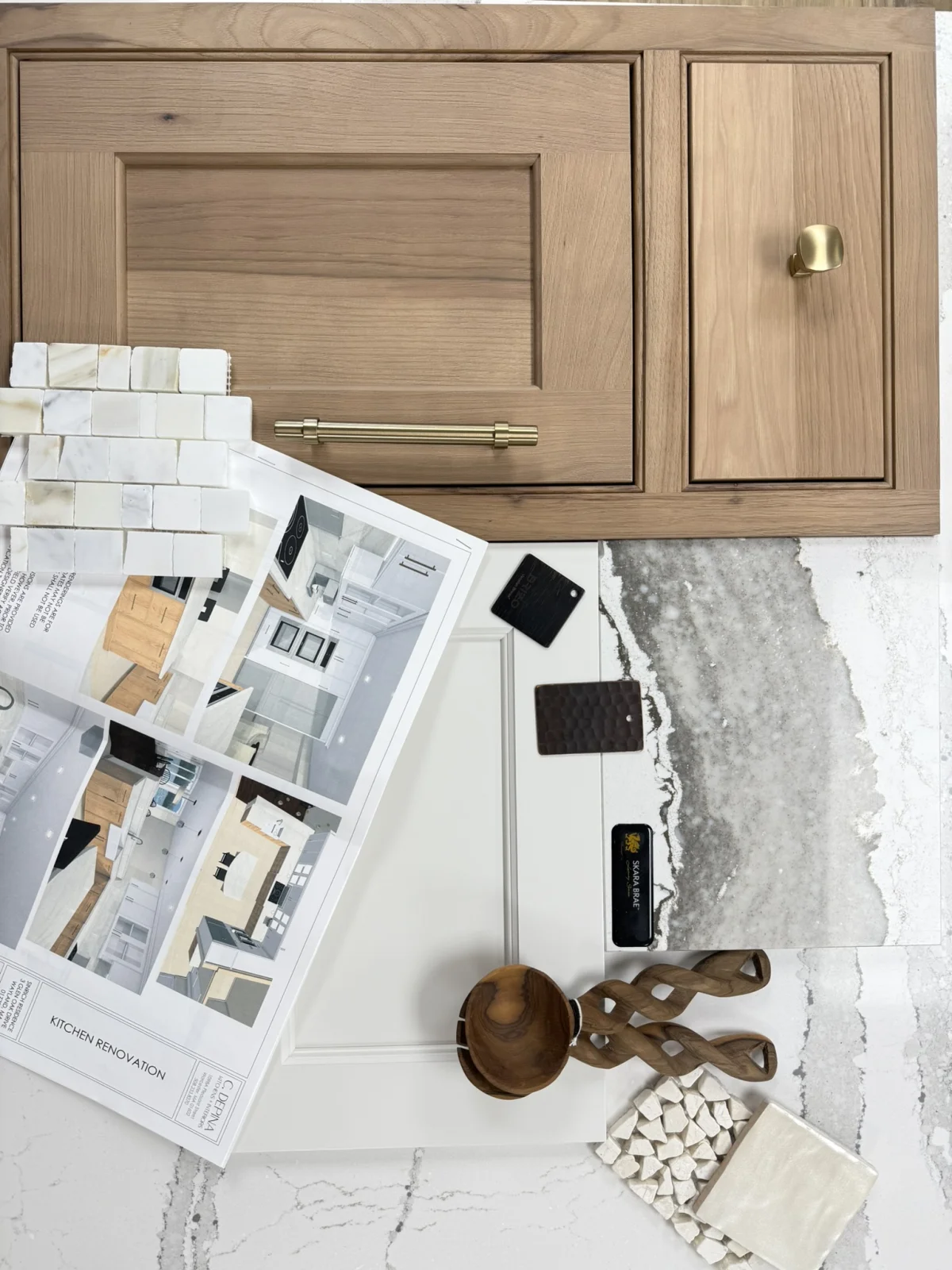
Before approving your finishes, lay the samples out together and look at them as a group.
Which material draws your attention first? Is that the feature you wanted to emphasize? Do the undertones work together? Does the combination feel connected to the house? Are there several strong patterns competing for the same attention?
Then ask yourself what you like about each choice.
“I’ve always loved this shade of green.”
“This countertop gives the room some movement without overwhelming it.”
“This cabinet style works with the original details we’re keeping.”
Those are useful reasons. They give your design a foundation that can last beyond the current round of inspiration photos.
You don’t need to predict every future trend. You need to understand your choices well enough to make them with confidence.
For help turning those preferences into coordinated selections, The Renovation Blueprint, Part 3: Design Decisions and Contracts walks through choosing materials, reviewing kitchen details, and understanding what to confirm before approving an order. The course is included with Renoversity Pro.